Terra Nova
Sustainability strategies are often treated like roadmaps: linear, structured, and goal-oriented. But what if we visualized them as living ecosystems instead — dynamic, participatory, and constantly evolving?
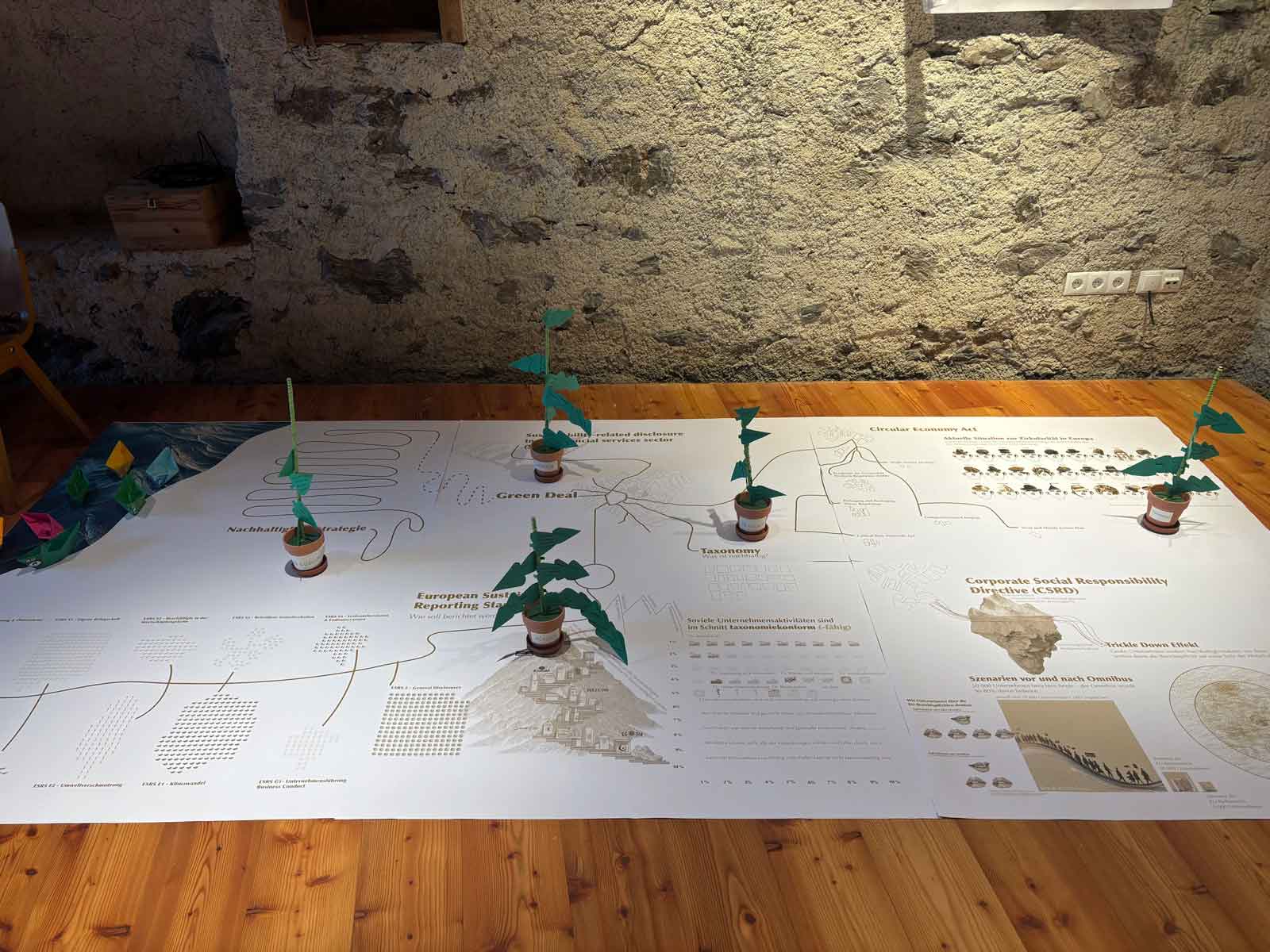
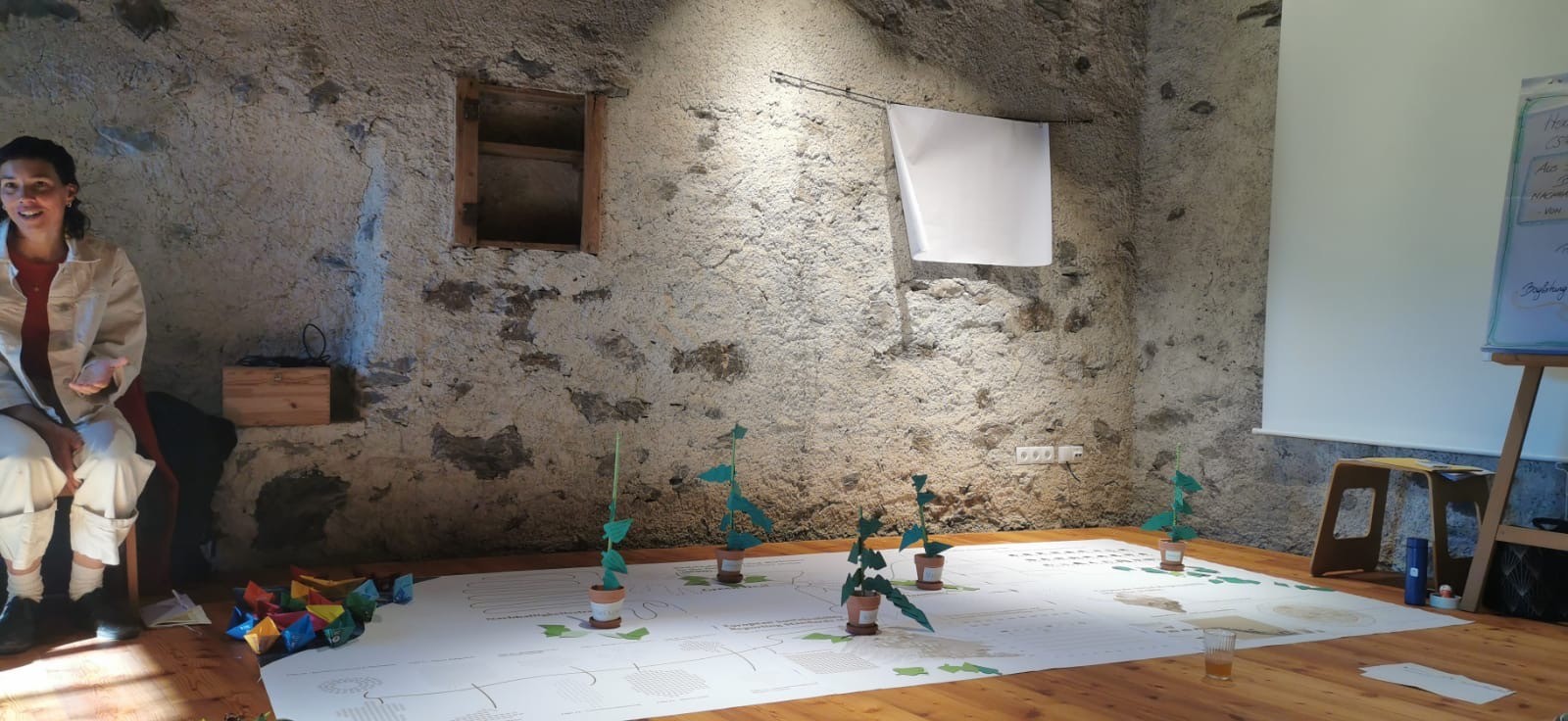
Terra Nova – The Land Map of Sustainability reimagines how we read and represent sustainability data. It transforms insights from an open survey into an organic landscape. It brings together collective perception, open data principles, and global sustainability frameworks in a visual ecosystem that grows organically from human insight. Terra Nova is built on the idea that data behaves like living systems.
When information is opened, shared, and allowed to evolve, it develops ecosystem-like properties: Interdependence (between ideas, contributors, and contexts), adaptability (new insights can emerge dynamically), resilience (diversity strengthens understanding) Rather than freezing sustainability into fixed metrics, Terra Nova visualizes it as an evolving landscape of meaning. From Soil to Structure – Translating Data into Form. The visual metaphor of Terra Nova reflects the systemic nature of sustainability transformation. Each layer of the landscape corresponds to a level of understanding — from the foundational systems beneath us to the evolving perceptions that shape collective action.
Sustainability strategies are often treated like roadmaps: linear, structured, and goal-oriented. But what if we visualized them as living ecosystems instead — dynamic, participatory, and constantly evolving?
Terra Nova – The Land Map of Sustainability reimagines how we read and represent sustainability data. It transforms insights from an open survey into an organic landscape. It brings together collective perception, open data principles, and global sustainability frameworks in a visual ecosystem that grows organically from human insight. Terra Nova is built on the idea that data behaves like living systems.
When information is opened, shared, and allowed to evolve, it develops ecosystem-like properties: Interdependence (between ideas, contributors, and contexts), adaptability (new insights can emerge dynamically), resilience (diversity strengthens understanding) Rather than freezing sustainability into fixed metrics, Terra Nova visualizes it as an evolving landscape of meaning. From Soil to Structure – Translating Data into Form. The visual metaphor of Terra Nova reflects the systemic nature of sustainability transformation. Each layer of the landscape corresponds to a level of understanding — from the foundational systems beneath us to the evolving perceptions that shape collective action.
The Soil – Foundational Systems
At the base lies the soil, representing the physical, social, and institutional foundations of sustainability.
It stands for the often invisible systems that support or hinder transformation — governance structures, economic incentives, cultural mindsets.
To cultivate change, this soil must sometimes be turned: old paradigms questioned, and new nutrients — ideas, values, and collaborations — mixed in.
Plants and Leaves – Growing Insights
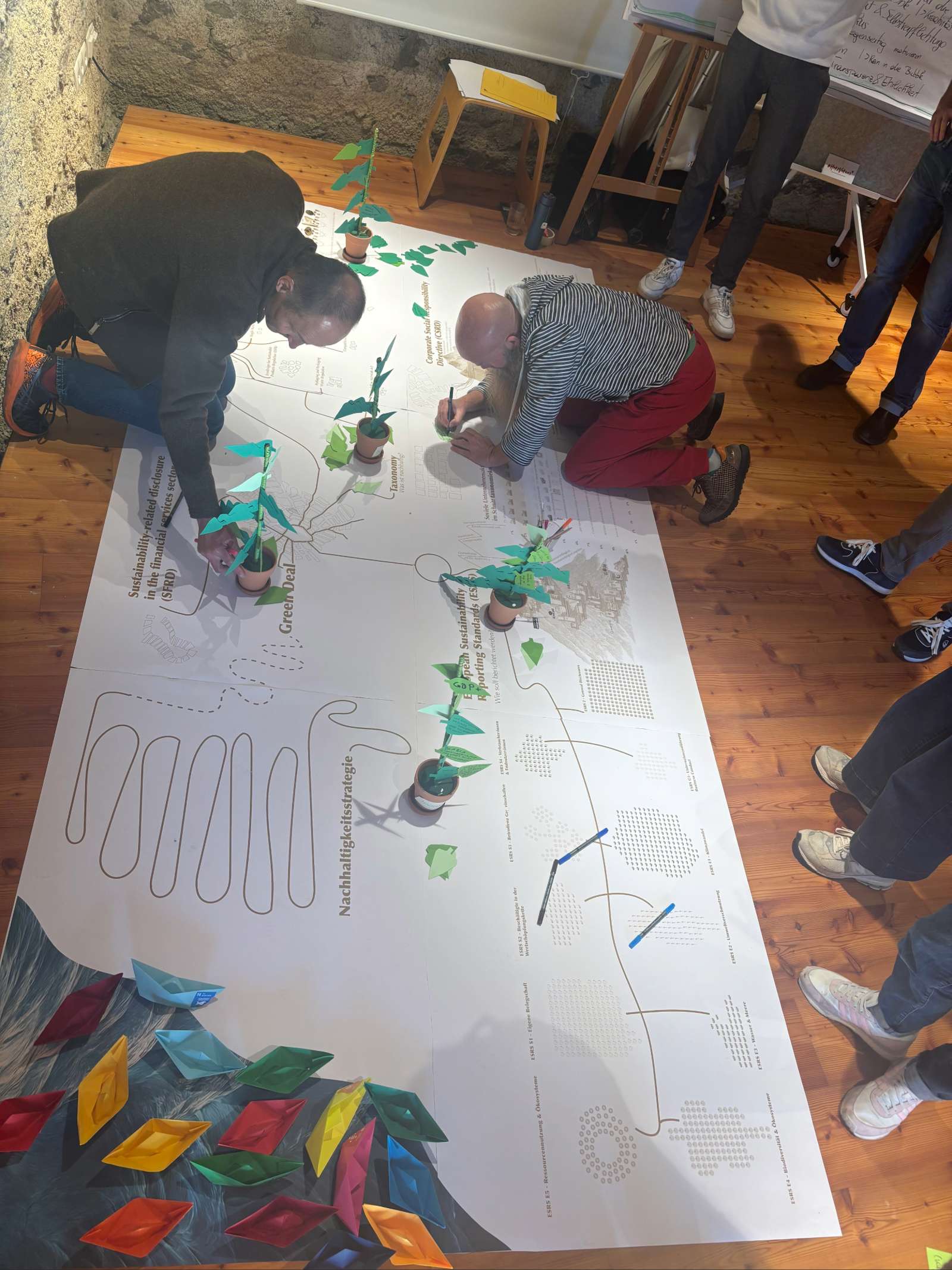
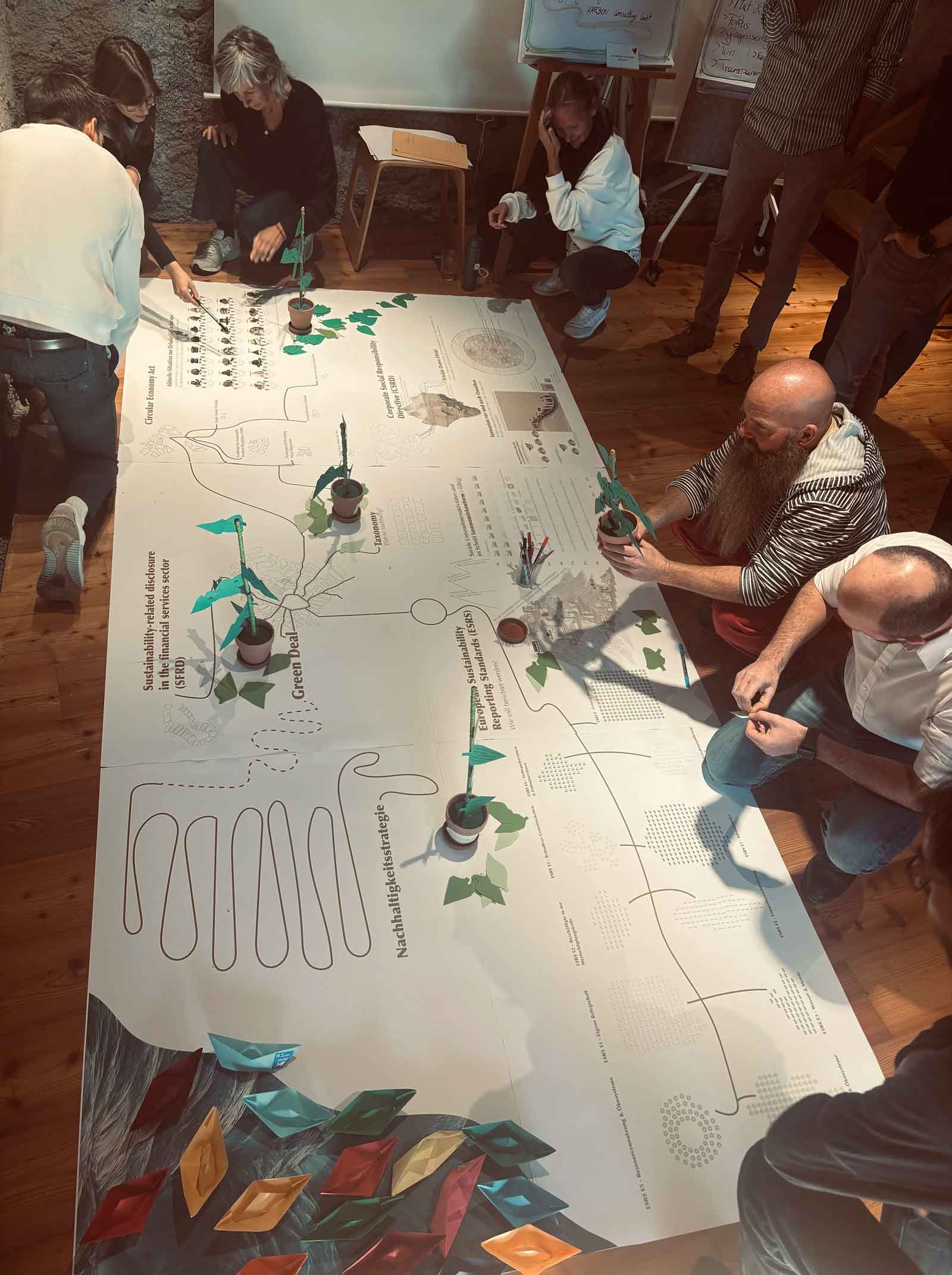
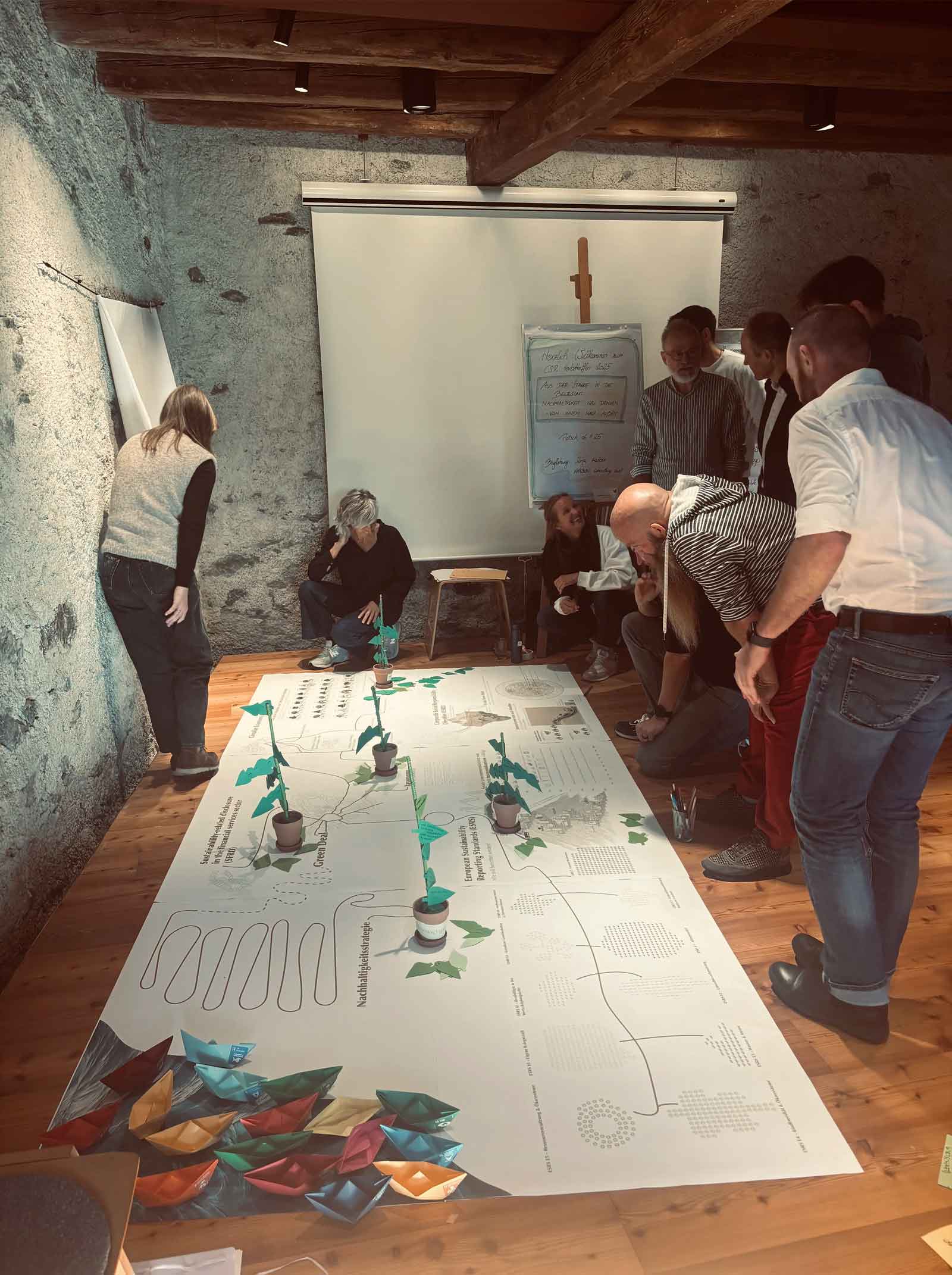
From this soil grow plants, each representing a topic that emerged through participatory data collection.
Their leaves correspond to individual responses to a survey I sent to the participants before the event.
The growth of these plants follows the Wiki Survey principle, introduced by Matthew Salganik in Bit by Bit (2017). Unlike traditional questionnaires, Wiki Surveys invite participants to add their own ideas and collectively shape the dataset. This open format allows data to grow organically rather than being constrained by pre-defined options — reflecting the inherently collaborative and evolving nature of sustainability work. In Terra Nova, this principle was applied through an open survey in which participants shared their perspectives on the challenges and opportunities of sustainability practice.
Their input became the seeds of the visualization: each new idea a germinating concept, each supporting vote a growing branch. When several participants identified “declining interest in sustainability” as a major barrier, for example, that insight formed a visible cluster — signaling a theme that carries both attention and urgency. Through this process, the plants in Terra Nova do not merely depict results; they embody the collective learning process. They show how data can evolve through participation, mirroring the dynamics of ecosystems — diverse, adaptive, and interdependent.
The Ocean and SDG Ships – Global Anchors
At the horizon, the sea connects the local landscape to global sustainability frameworks.
Here, ships represent the UN Sustainable Development Goals (SDGs) — carriers of international ambition and thematic focus. They navigate between global targets and local realities, dropping anchors where participants’ ideas intersect with specific SDGs. The ocean symbolizes the interface between human perception and global policy, making visible how local understanding aligns with — or diverges from — established sustainability agendas.
The Soil – Foundational Systems
At the base lies the soil, representing the physical, social, and institutional foundations of sustainability.
It stands for the often invisible systems that support or hinder transformation — governance structures, economic incentives, cultural mindsets.
To cultivate change, this soil must sometimes be turned: old paradigms questioned, and new nutrients — ideas, values, and collaborations — mixed in.
Plants and Leaves – Growing Insights
From this soil grow plants, each representing a topic that emerged through participatory data collection.
Their leaves correspond to individual responses to a survey I sent to the participants before the event.
The growth of these plants follows the Wiki Survey principle, introduced by Matthew Salganik in Bit by Bit (2017). Unlike traditional questionnaires, Wiki Surveys invite participants to add their own ideas and collectively shape the dataset. This open format allows data to grow organically rather than being constrained by pre-defined options — reflecting the inherently collaborative and evolving nature of sustainability work. In Terra Nova, this principle was applied through an open survey in which participants shared their perspectives on the challenges and opportunities of sustainability practice.
Their input became the seeds of the visualization: each new idea a germinating concept, each supporting vote a growing branch. When several participants identified “declining interest in sustainability” as a major barrier, for example, that insight formed a visible cluster — signaling a theme that carries both attention and urgency. Through this process, the plants in Terra Nova do not merely depict results; they embody the collective learning process. They show how data can evolve through participation, mirroring the dynamics of ecosystems — diverse, adaptive, and interdependent.
The Ocean and SDG Ships – Global Anchors
At the horizon, the sea connects the local landscape to global sustainability frameworks.
Here, ships represent the UN Sustainable Development Goals (SDGs) — carriers of international ambition and thematic focus. They navigate between global targets and local realities, dropping anchors where participants’ ideas intersect with specific SDGs. The ocean symbolizes the interface between human perception and global policy, making visible how local understanding aligns with — or diverges from — established sustainability agendas.
TA Living Map of Collective Transformation
Terra Nova invites us to see sustainability not as a static report, but as a living, breathing landscape — continuously shaped by participation, reflection, and learning.
By combining participatory data collection, ecological metaphors, and policy context, it turns data into a medium of connection.
The project shows that the future of sustainability communication lies not in more data, but in more meaningful relationships with data.
Only when people can see themselves within the data ecosystem do we begin to navigate — together — towards a truly sustainable world.
If you want the full map, contact me.
TA Living Map of Collective Transformation
Terra Nova invites us to see sustainability not as a static report, but as a living, breathing landscape — continuously shaped by participation, reflection, and learning.
By combining participatory data collection, ecological metaphors, and policy context, it turns data into a medium of connection.
The project shows that the future of sustainability communication lies not in more data, but in more meaningful relationships with data.
Only when people can see themselves within the data ecosystem do we begin to navigate — together — towards a truly sustainable world.
If you want the full map, contact me.
The Land Map of Sustainability transforms sustainability data into a living landscape. Built from a participatory survey, collective insights grow into soil, plants, and oceanic connections to the UN Sustainable Development Goals. Instead of presenting fixed metrics, Terra Nova visualizes sustainability as an evolving ecosystem — shaped by perception, participation, and shared responsibility. It invites viewers to see themselves within the data and to navigate change together.